
Shower Screen Replacement Sydney
Quick check
Tick three of the top ones and you probably need a new screen. The bottom two mean you probably do not.
- White powder on the frame, and it gives when you press it
- New seals last a few months, then it leaks again
- Nobody can find the rollers or hinges for it
- It is only the door that sticks or hops off
- One sheet is cracked, everything else is sound
Sound like the bottom two? Start with door repairs or glass replacement. Both cost far less than what is on this page.
Most people who ask for this don’t need it
When a new screen is the right call
The frame has corroded through
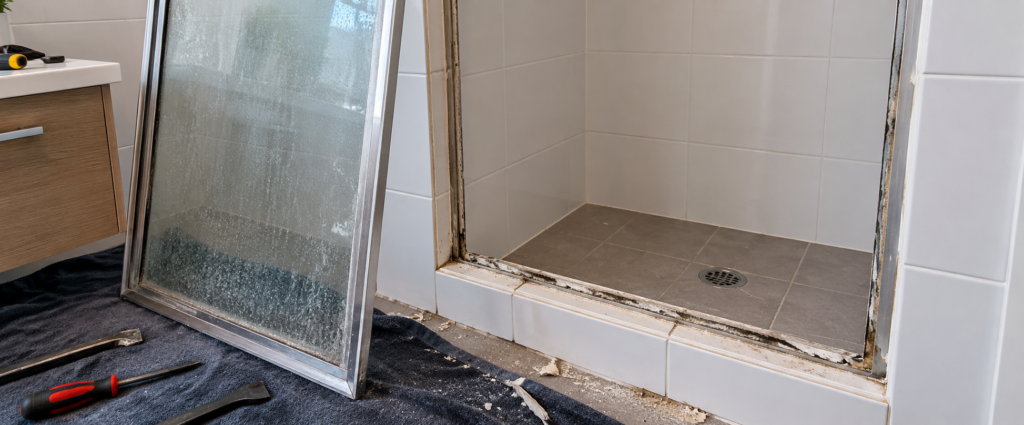
It starts as white powder on the bottom rail, usually in the corner where water sits longest. A year or two on you can press a thumbnail into it. After that the corner joins open and the rail will not hold a screw, so a new seal or a new sheet fitted to it is borrowed time.
The space has shifted
A lot of Sydney sits on clay that swells and shrinks with the seasons, and bathrooms show it. The step at the base hairlines, one wall leans a few millimetres. Measure the opening top and bottom and you get two different numbers, so a screen cut for the old shape leaves a wedge of daylight at one end.
The parts are gone
Most wheel and seal types from the last thirty years are still around, and where they are not there is usually something that fits the same channel. The ones that beat us are older imported frames with an odd channel width. Nothing slides in, and a new screen becomes the only way to get a door that shuts.
The bathroom is changing
New tiles add six or eight millimetres to each wall. Pull a bath out and the opening grows by half a metre. Either way the old screen will not go back, so this turns into an installation job rather than a repair.
Send a photo, find out which job it is
- Free, and you are not signing up to anything
- Most answers go back out the same day
- We say so if a cheaper fix would do
Choosing the new screen
Framed
Metal right around the outside with thinner glass sitting in it. The frame carries the weight, so the sheet can be 4mm or 5mm. Most Sydney homes built before about 2005 have one of these.
- Cost
- Lowest
- Glass
- 4–6mm
- Cleaning
- Most to scrub
- Watch for
- Frame rotting
Semi-frameless
A framed fixed panel on one side, with a bare-edged door hung off it. Roughly six out of ten screens we fit are this build.
- Cost
- Middle
- Glass
- 6–8mm
- Cleaning
- Fewer grooves
- Watch for
- Door seal
Frameless
10mm glass held by two or three brackets, nothing around the edges. One bead of sealant at the base and that is the only place scum can gather.
- Cost
- Highest
- Glass
- 10mm
- Cleaning
- Easiest
- Watch for
- Hinges
How the job runs
What changes the price
- Which build you pick. Going from 5mm framed to 10mm frameless roughly doubles the weight of glass and swaps a cheap rail for machined hinges. The price follows that, not the label.
- How big it is. A 10mm panel at 2100mm tall weighs around 50 kilos, so it needs two people and suction lifters rather than one pair of hands.
- Corner or straight. A corner screen is three pieces of glass meeting at a right angle instead of two in a line, and every join is another place that has to seal.
- What the old one leaves behind. Six or eight old screw holes in the tile, a hairline across the step, or water that pools instead of running to the drain. All of it gets dealt with before a new rail goes up.
- Getting it up there. A 2100mm sheet does not turn a tight stair landing. Third floor with no lift sometimes means a smaller panel layout instead of one big one.
Where we replace screens
Common questions
You keep using the shower right up to the morning the old one comes out. The gap after that is the furnace time, usually three to five working days, and the shower is only unusable for the twenty-four hours after fitting while the sealant cures. So you lose one day, not the week.
Nearly always. New rails go into the same tiled walls, and because standard rail widths have not changed much they usually cover the old screw holes. Any that stick out get plugged and sealed, not just hidden behind the new rail where water would find them.
No. The opening sets the size, the style is open. Most people who switch go from framed to semi-frameless, because it drops two full-length channels out of the cleaning and the price gap is smaller than they expect.
It happens often enough that we warn people. Grout gone to powder, a soft patch in the step, or dark staining in the corner that means the membrane underneath has failed. We stop and get you in there to look. Minor stuff we seal around. A failed membrane is a tiler’s job, and a new screen over the top only buys a year.
Depends what bothers you. Frameless has one bead of sealant and no channels, so there is almost nothing to scrub. It also hangs fifty kilos of glass on two hinges, which is fine with good hardware and a problem with cheap hardware. For most bathrooms semi-frameless gets you most of the look for a fair bit less.
Yes. Rails, glass, old sealant and the grit scraped out of the track all leave in the van. Toughened glass goes to a glass recycler rather than landfill.
Sometimes, and it is worth asking. If the sheets are sound and only the rails have gone, a frame swap comes in well under a full screen. It hinges on channel width matching your glass thickness. We can check that in two minutes with a gauge.