
Shower Screen Seal Replacement Sydney
Water creeping out onto the bathroom floor is almost always a worn seal. We carry the common profiles in the van, so most of these are sorted in one visit — usually under an hour.

Checked by a licensed glazier · 25 October 2026
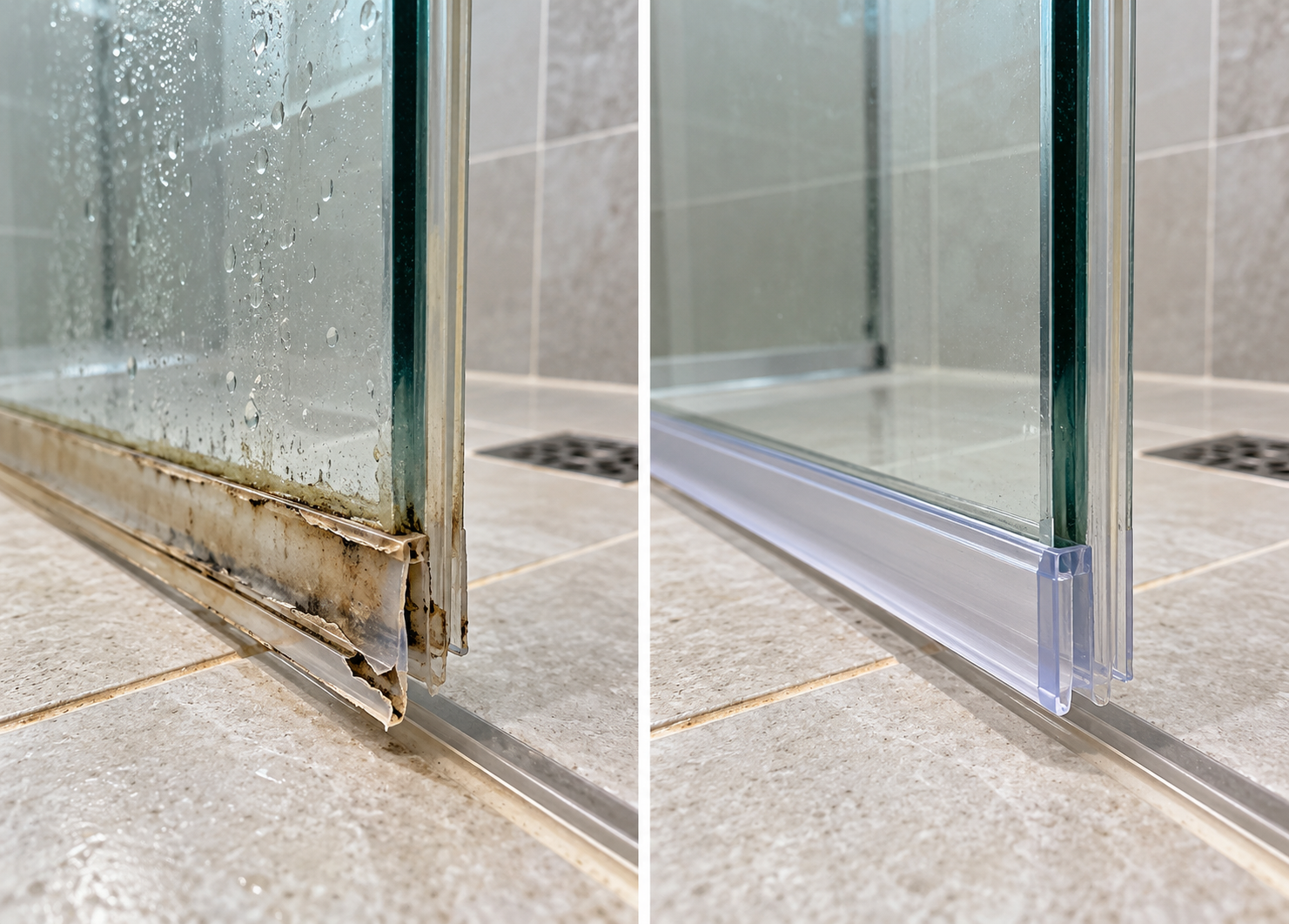
Is it actually the seal?
Worth two minutes before you book anything. Where the water comes out tells you most of it. Dry the floor, run the shower for a minute, then watch.
Water along the bottom of the door
The sweep or drip rail underneath has gone hard and stopped touching the hob. This is the common one, and it’s a ten-minute swap.
Wet patch at the hinge or jamb side
The side wipe has shrunk back, or the magnetic strip isn’t meeting cleanly anymore. Both pull out and push back in.
Water seeping under the frame, outside the screen
That’s the silicone between the frame and the tiles, not the rubber. Same visit, different fix — we cut the old bead out and run a fresh one.
Door sits crooked or drags
Then the seal is a symptom. A dropped door wears one end of the rubber flat. Worth reading the page on doors that won’t close before you order seals.
The seals we carry and replace
Shower seals aren’t one part. There are half a dozen profiles out there, and they aren’t interchangeable — the strip has to match the glass thickness and the channel it clips into.
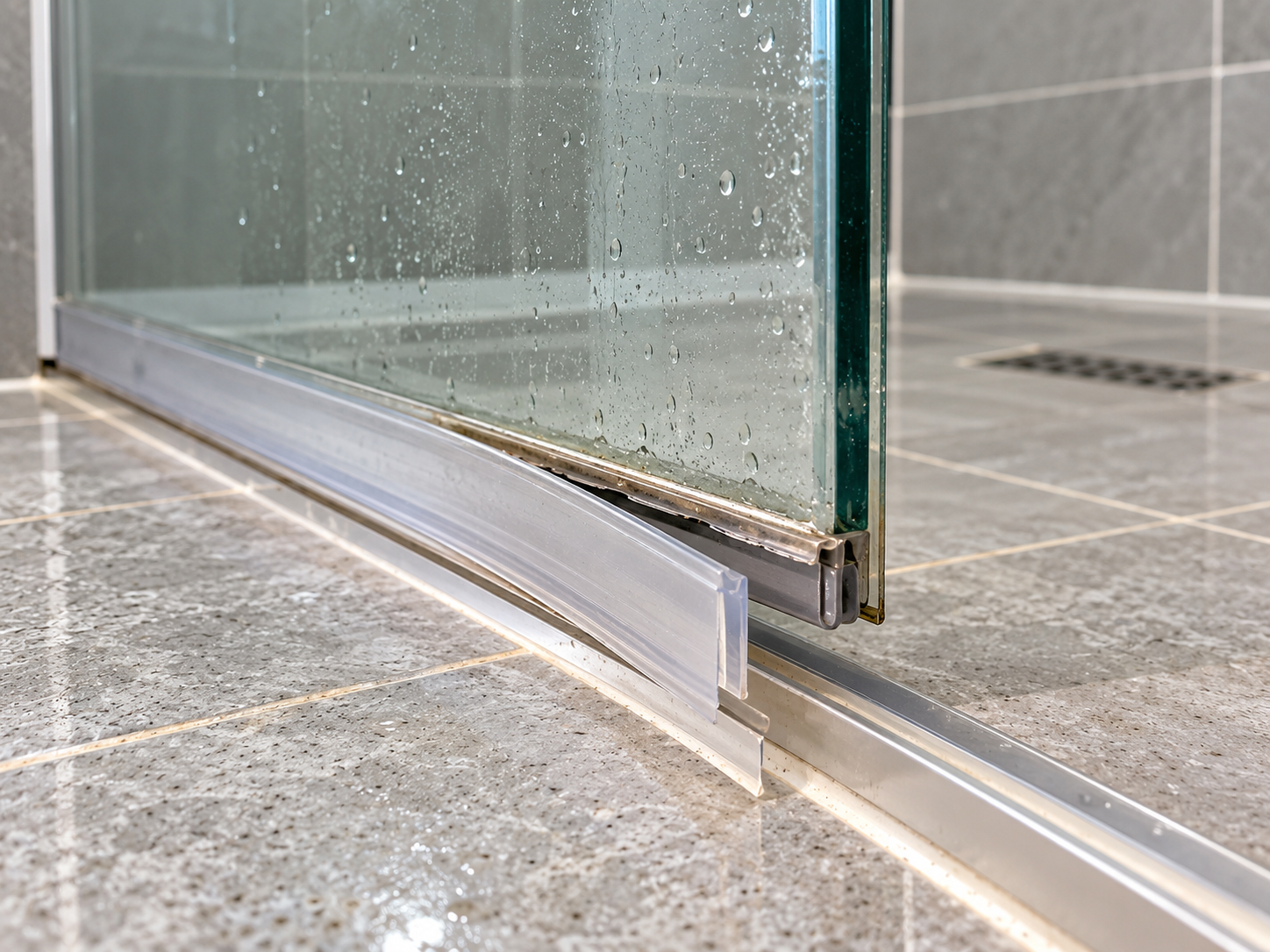
Bottom sweep and drip rail
The flat blade along the base of the door. Hardens first because it copes with the most water and the most footsteps.
Bubble or bulb seal
Round hollow profile on sliding panels. When it flattens out and stops springing back, water runs straight past it.
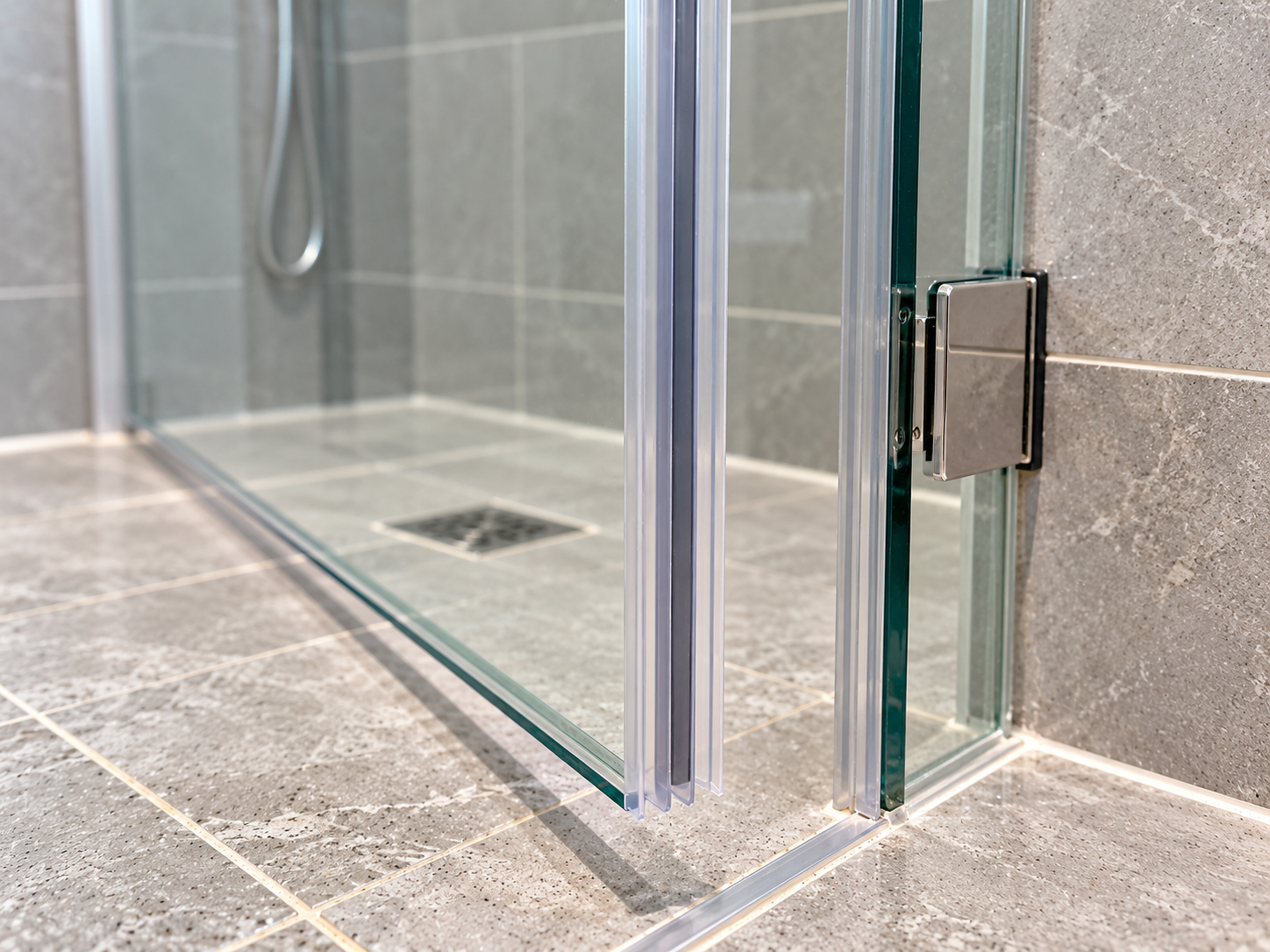
Magnetic closing strip
On pivot and hinged doors, the two halves pull together. Age splits the magnet from the PVC and the door stops sitting shut.
Side jamb wipe
Thin fin down the hinge edge. Easy to miss, and it’s behind a lot of leaks people blame on the glass.
Sliding door guides
Nylon guides and the seal sitting in the bottom track. Replaced together, since a worn guide chews through new rubber fast.
Silicone at the hob and walls
Not a seal you buy, but it does the same job. Mouldy, lifting or cracked silicone gets cut out and redone properly.
Older screens are the tricky ones. If the profile hasn’t been made for fifteen years we’ll measure it and match the closest current equivalent, and if nothing fits we’ll say so rather than bodge it. At that point the honest answer is sometimes a whole new screen.
How the visit runs
Four steps, one trip. The photo at the start is what makes that possible — it’s how we know which seals to load before we leave.
Send a photo
Close-up of the leaking edge and one of the whole screen. We’ll name the profile from that.
We turn up with the seal
Matching strips already in the van. No ordering, no second visit for most screens.
Old seal out, channel cleaned
Old rubber and soap scum come away first. New seal won’t grip a dirty channel.
Fitted and water tested
We run water over it while you watch. If silicone went in, leave it 24 hours before showering.
Send a photo and get a price back
Two photos and your suburb is all we need. You’ll get a price, not a “from” figure that changes when we arrive.
- Free, and nothing’s locked in
- Most prices go back out the same day
- Same-day callouts across Sydney when we’re nearby
What the price covers
No line items added on at the end. This is everything that happens on a standard seal job.
The seals themselves
Matched to your glass thickness and channel, not whatever generic strip was closest.
Stripping the old ones out
Including the hardened bits stuck in the track that most people can’t shift at home.
Cleaning the channel
Soap scum and old adhesive off, so the new seal seats properly and stays put.
Fresh silicone where it’s needed
Mouldy or lifting beads at the hob and wall junctions cut out and re-run in the same visit.
A door adjustment
If it’s sitting low or catching, we square it up. A new seal on a crooked door leaks again by winter.
12-month workmanship warranty
On our fitting. If a seal we fitted lifts or leaks inside that, we come back and sort it.
Why shower seals give up
Most last five to eight years in a family bathroom. These are the things that cut it shorter.
Heat and age
PVC goes stiff. A seal that can’t flex can’t press against the glass, so it stops touching before it looks worn out.
Bleach and heavy-duty cleaners
Chlorine eats the plasticiser in the rubber. The seal goes chalky, then brittle, then it splits along the fold.
A door that’s dropped
Tired rollers or loose hinges put the whole weight on one corner of the seal. Fix the rollers and track and the new seal lasts properly.
The wrong profile last time
A strip that nearly fits will clip in and look right. It just won’t make contact across the full length.
Movement in the frame
Older aluminium frames flex as fixings loosen, which opens a gap the seal was never sized to cover.
If the glass itself is chipped or the frame is corroding, seals won’t be the end of it. Have a look at what’s involved in repairing the glass panel before you spend money on rubber.
What does it cost to replace a shower screen seal in Sydney?
Four things move the number: how many seals are going in, whether the profile is still made, whether silicone needs redoing, and how far out you are. Here’s the shape of it.
One seal swapped
Bottom sweep or a single side wipe, standard profile
30–45 min
Full set of seals
Every strip on the screen replaced at once
1–1.5 hrs
Seals plus re-silicone
Old bead cut out, joints cleaned, fresh silicone run
1.5–2 hrs
Seals with a door adjustment
Rollers or hinges reset so the new seal sits right
1.5–2 hrs
Obsolete profile
Measured, matched to a current equivalent, ordered in
Two visits
Ranges cover metropolitan Sydney and include labour, materials and GST. Send a photo for a firm figure.
If the frame is pitted and three of the seals are gone together, the sums change. We’ll tell you straight when a full restoration is better value than patching it strip by strip. Sliding setups have their own quirks too, which the sliding screen page goes through.
Where we replace seals
Right across Sydney, beaches through to the far west. Seal jobs are quick, so we can usually fit one in around the bigger work the same week you call.
Questions people ask before booking
Short answers to the things that come up on the phone most days.
Just the seal, nine times out of ten. The glass and the frame usually have years left in them. A new screen only makes sense when the frame is corroding, the glass is chipped, or the profile stopped being made and nothing current will fit.
Half an hour for a single strip, around an hour and a half for a full set. If silicone needs cutting out and redoing, add another half hour.
Straight away if it was seals only. If we ran new silicone, leave it 24 hours. It skins over in an hour and looks finished, but underneath it’s still soft, and a shower at that point will pull it away from the tile.
The common profiles, yes. That’s why we ask for a photo first. Nearly every standard framed and semi-frameless screen in Sydney is covered, so it’s one visit.
Often, but not always. We measure the channel and the glass thickness and match the closest current profile. When nothing genuinely fits we’ll tell you, rather than force something in that leaks again in six months.
That’s silicone rather than rubber, and yes, we do it on the same visit. The bead between the frame and the tiles fails with mould and movement, and it has to be cut out properly, not smeared over.
You can, and for a simple bottom sweep plenty of people do. The part people get wrong is the profile. Glass thickness varies between 5mm, 6mm, 8mm and 10mm, and the strip has to match the channel exactly or it sits loose.
No separate callout charge. The price you’re quoted off the photo is the price on the day, as long as what we find matches what we were sent.
Still finding water on the floor?
Send two photos and your suburb. We’ll tell you which seal has gone, what it costs, and when we can be there.